Table of Contents
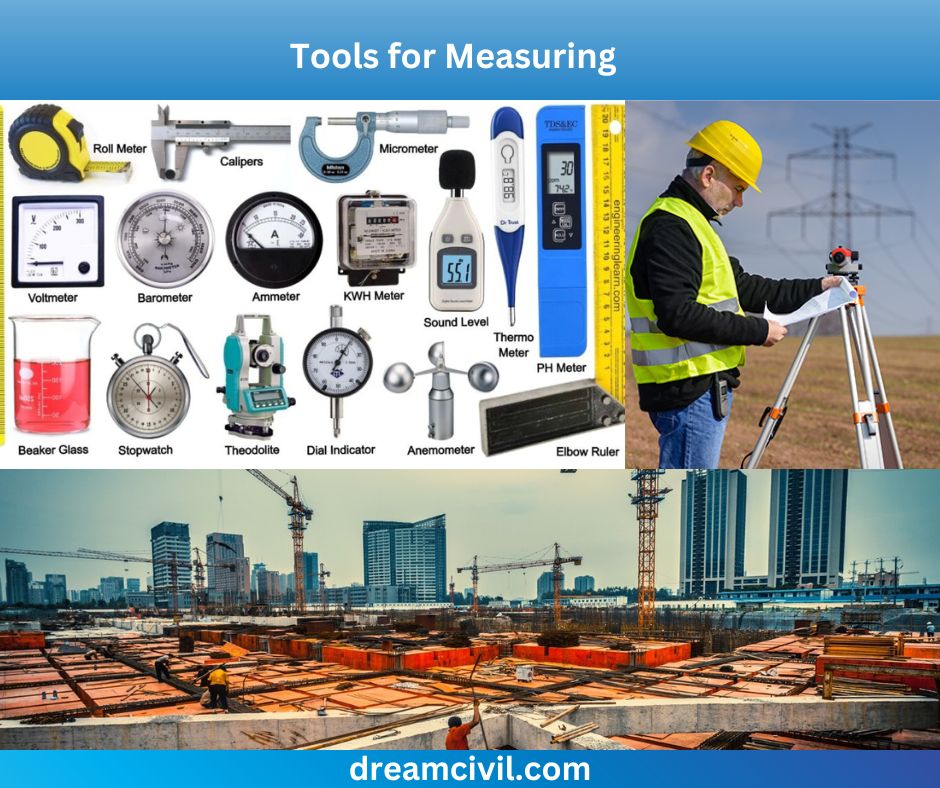
Many construction sites use different tools and equipment for specific fieldwork. Over the past few decades, there has been a significant rise in the development of new measuring tools to increase work efficiency and to reduce time.
Based on my experience as a field practitioner in construction, I have listed some measuring tools with proper classification and their field use.
#. List of Tools for Measuring in Construction
1. Linear & Distance Measuring Tools
| Tools | Construction Use |
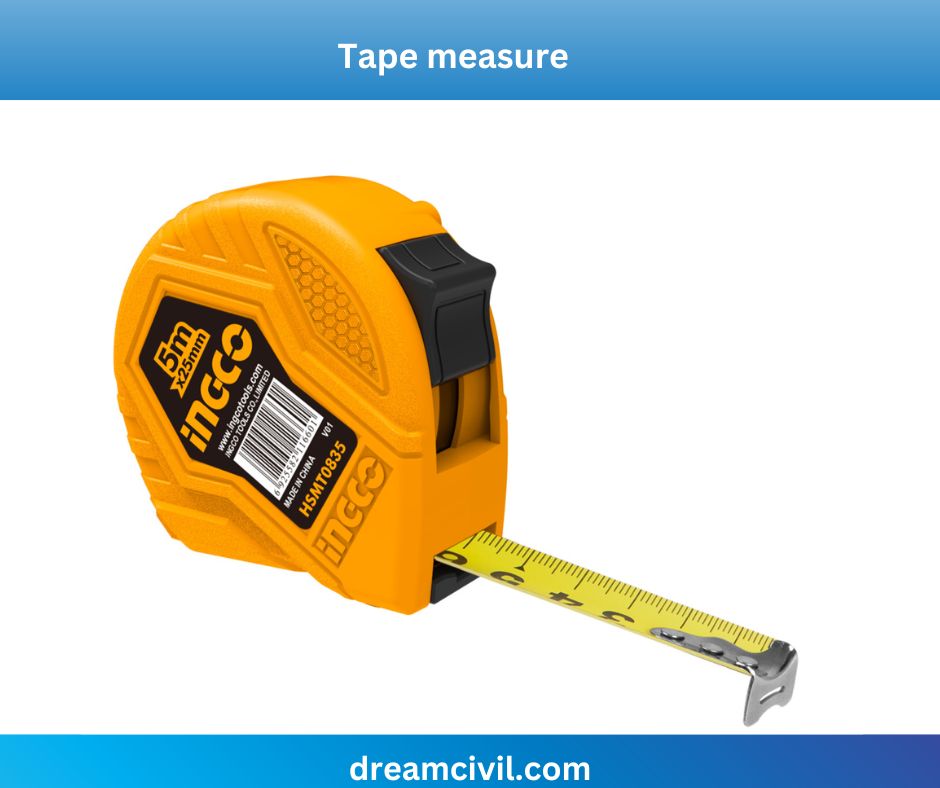 Tape Measure Tape Measure | ✓ It is used to measure linear dimensions. ✓ In construction, it is commonly used for measurements of rooms, walls, openings, and formwork. |
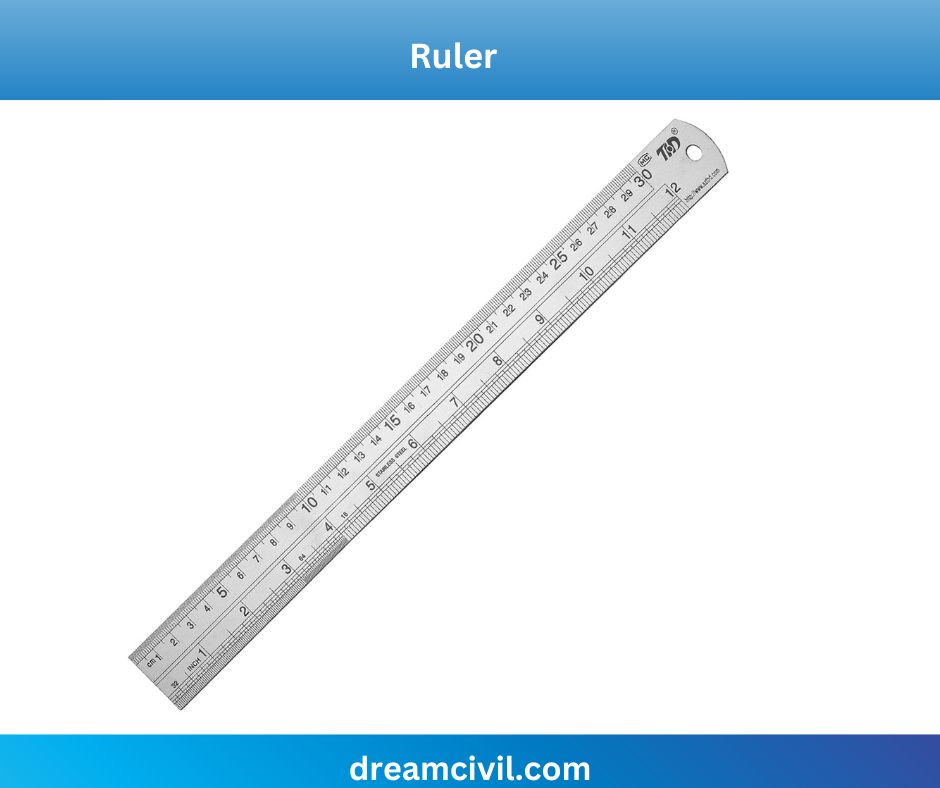 Ruler Ruler | ✓ It measures different objects’ lengths and widths, and it helps to draw straight lines. ✓ It is widely used in engineering to convert measurements into blueprints and technical drawings, as well as in construction projects and carpentry. |
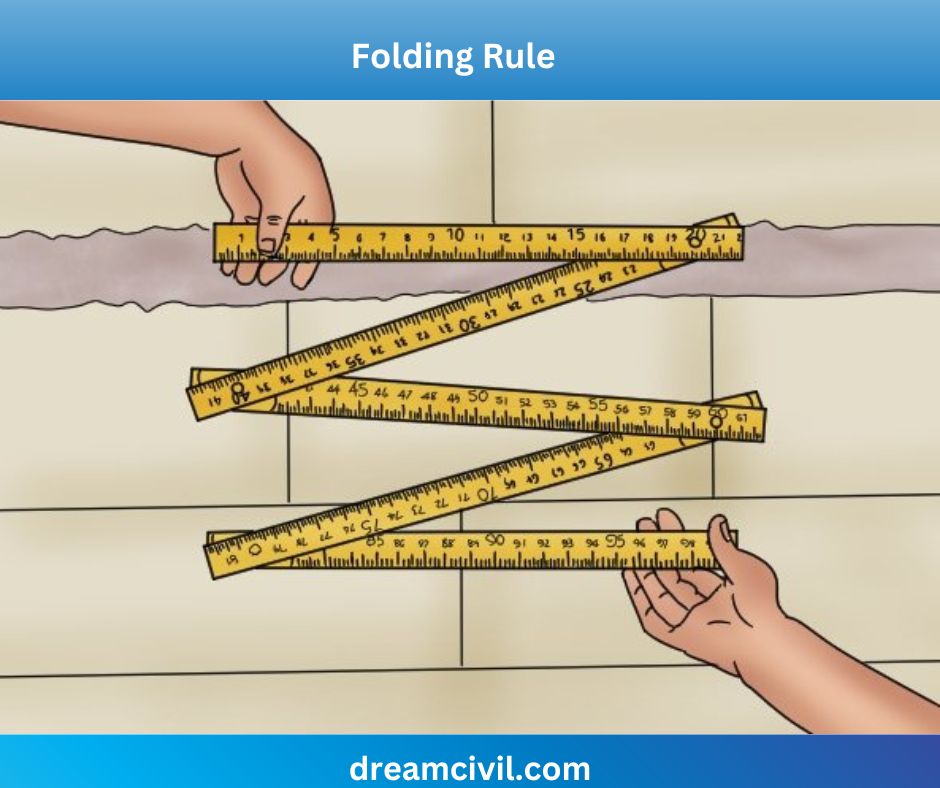 Folding rule Folding rule | ✓ Measures length and inner dimensions. ✓ Useful for measuring corners, edges, and irregular spaces. |
 Wheel gauge | ✓ A wheel gauge is used for precise parallel marking in woodwork before cutting. |
 Engineer’s Scale | ✓ An Engineer’s scale is used in technical drawing for sketching out proper dimensions, i.e., for precisely describing the site property. ✓ It is used to measure roads, topographical features, water mains, etc in a topographical map. |
2. Precision Measuring Tools
| Tools | Construction Use | |
 Vernier Caliper | ✓ It is used to measure inner and outer diameters of cylindrical objects like pipes, steel rebar, etc. | |
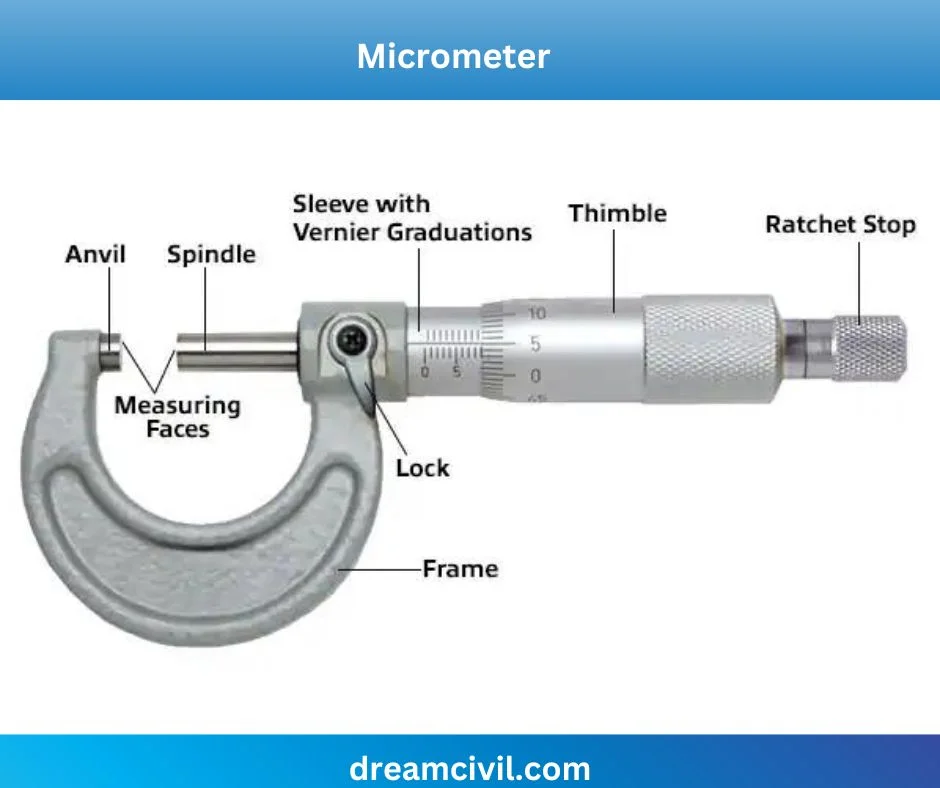 Micrometer Micrometer | ✓ Measures the thickness and outer diameter of wire, rebars, etc with higher accuracy. | |
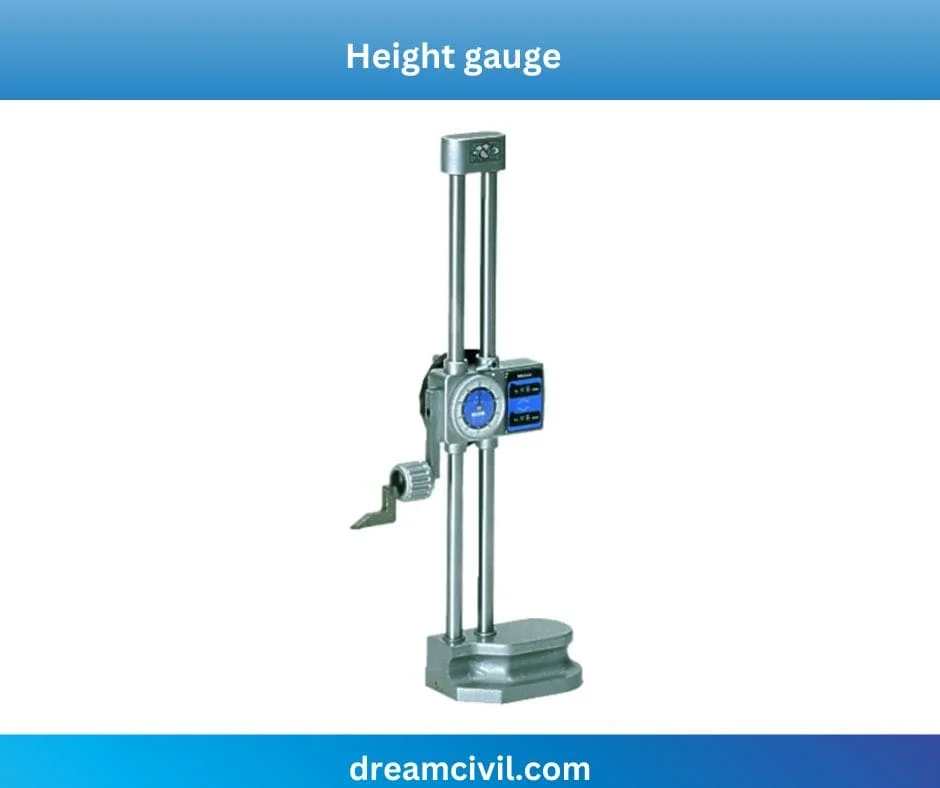 Height Gauge Height Gauge | ✓ It measures the height of an object. ✓ It helps to determine the vertical distance from a reference surface. | |
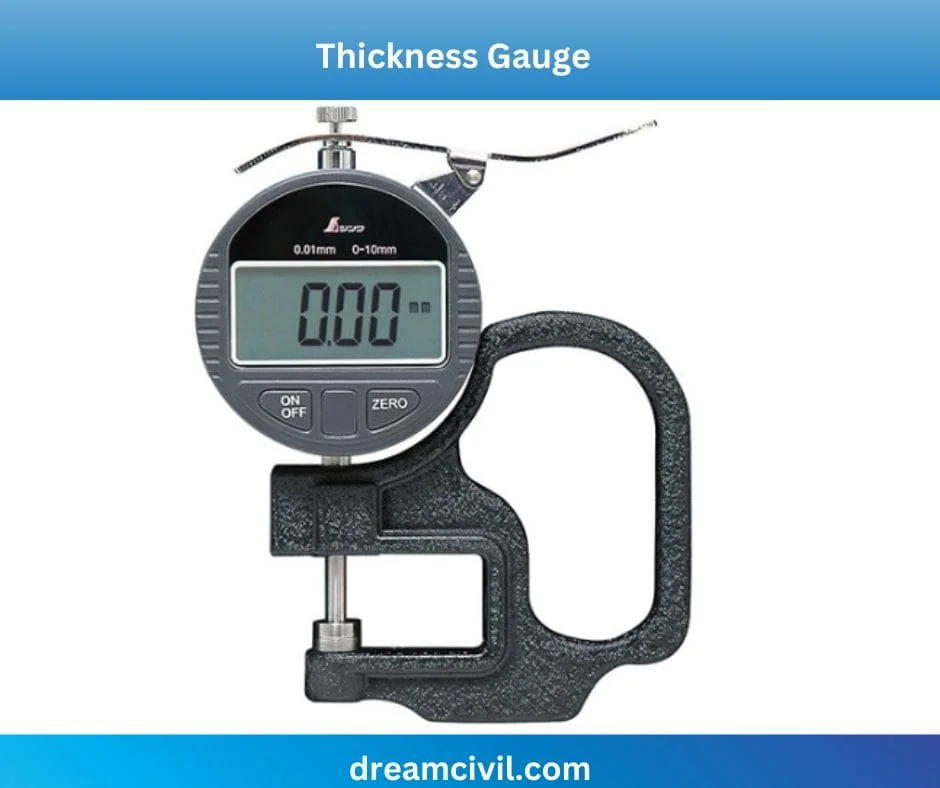 Thickness Gauge Thickness Gauge | ✓ It helps to measure the thickness of all kinds of material. | |
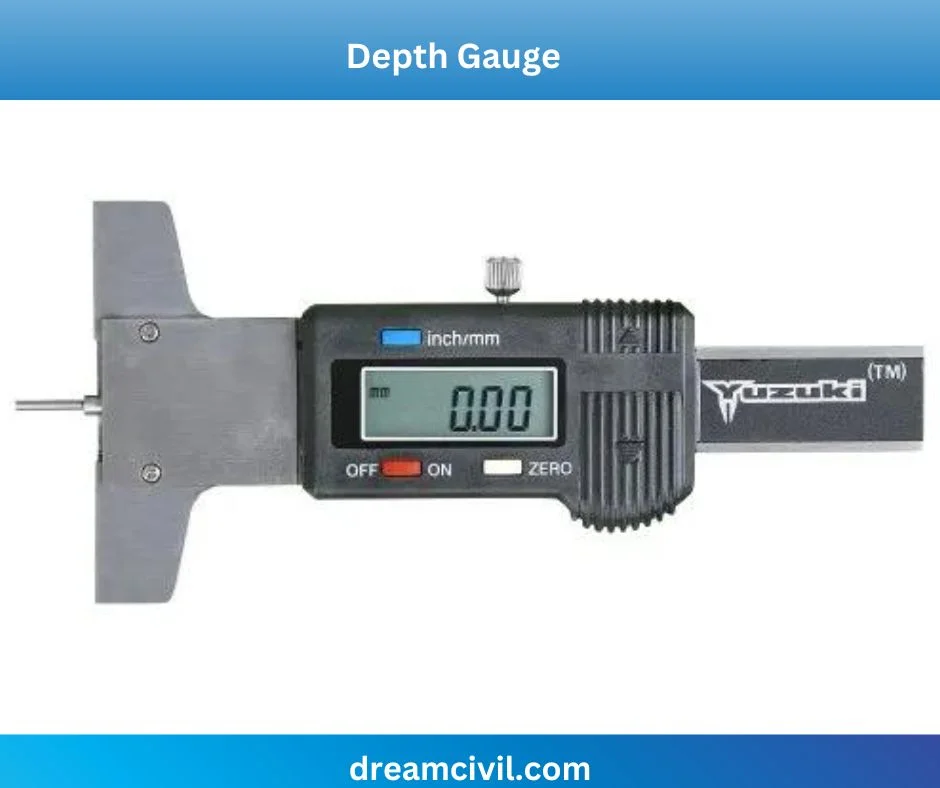 Depth Gauge Depth Gauge | ✓ It is used to measure the depth of an object. | |
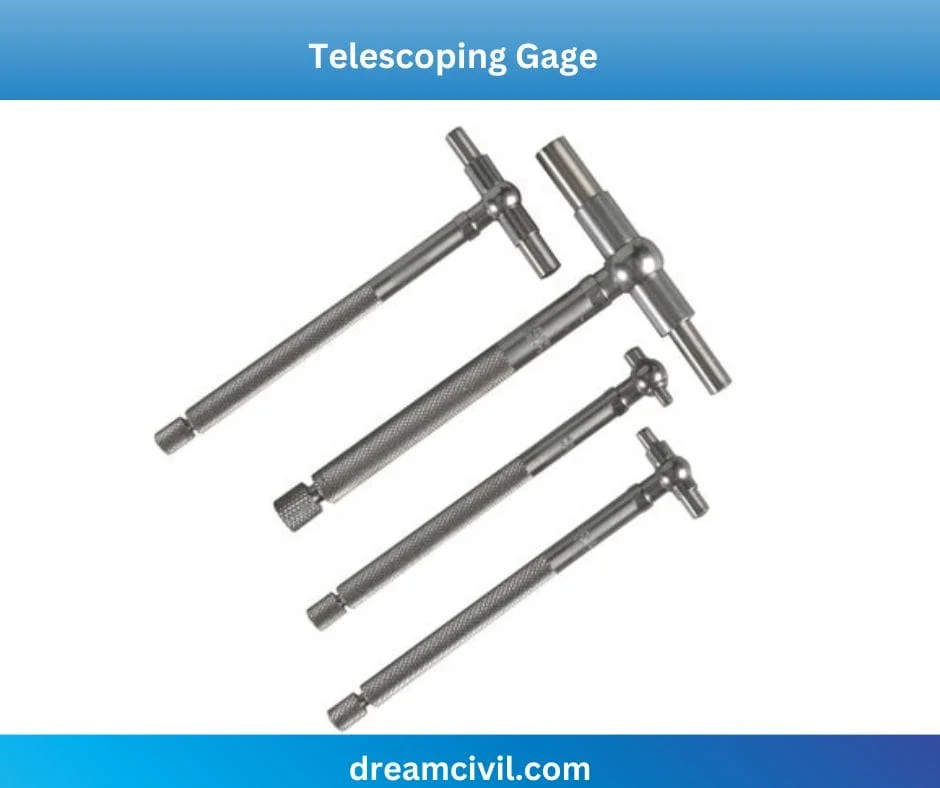 Telescoping Gauge Telescoping Gauge | ✓ It helps to measure the internal diameter of the hole, bore, groove, slot, etc. | |
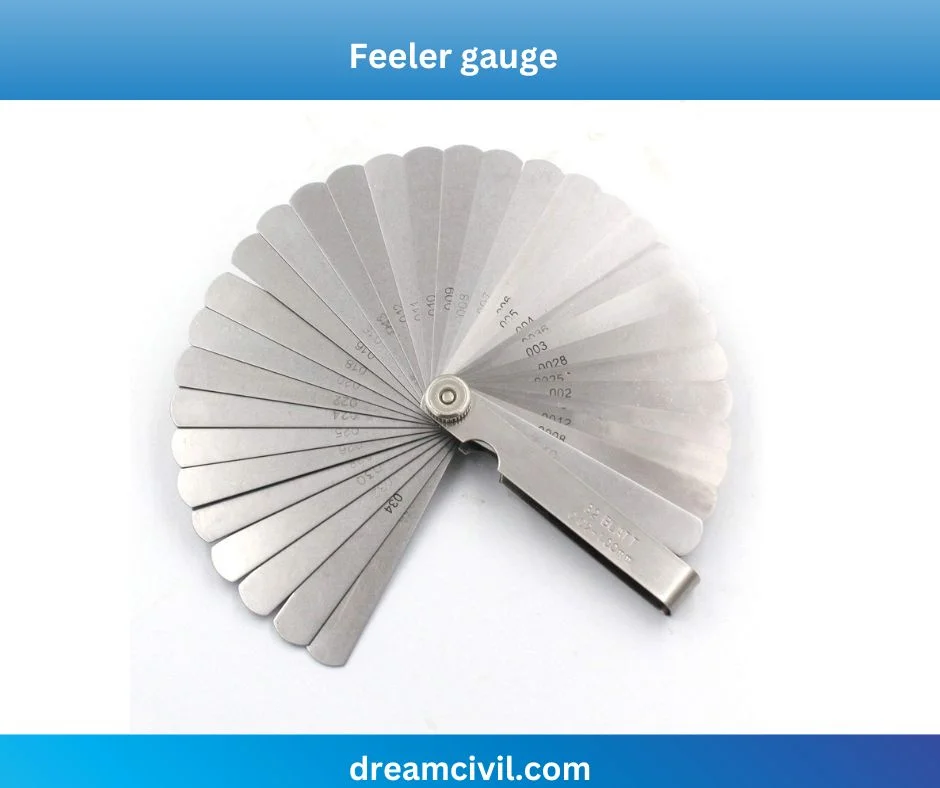 Feeler Gauge Feeler Gauge | ✓ It is a measuring instrument that measures narrow gaps and crack widths between two closed objects | |
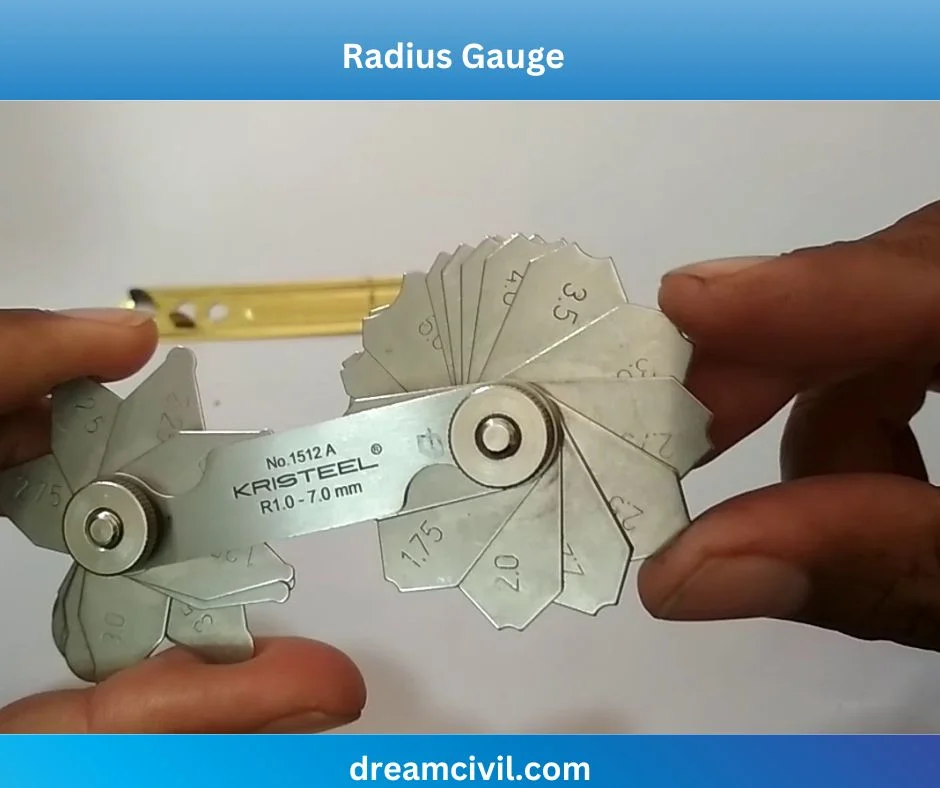 Radius Gauge Radius Gauge | ✓ It measures the curved corners and edges of an object. |
3. Levelling & Elevation Measuring Tools
| Tools | Construction Use |
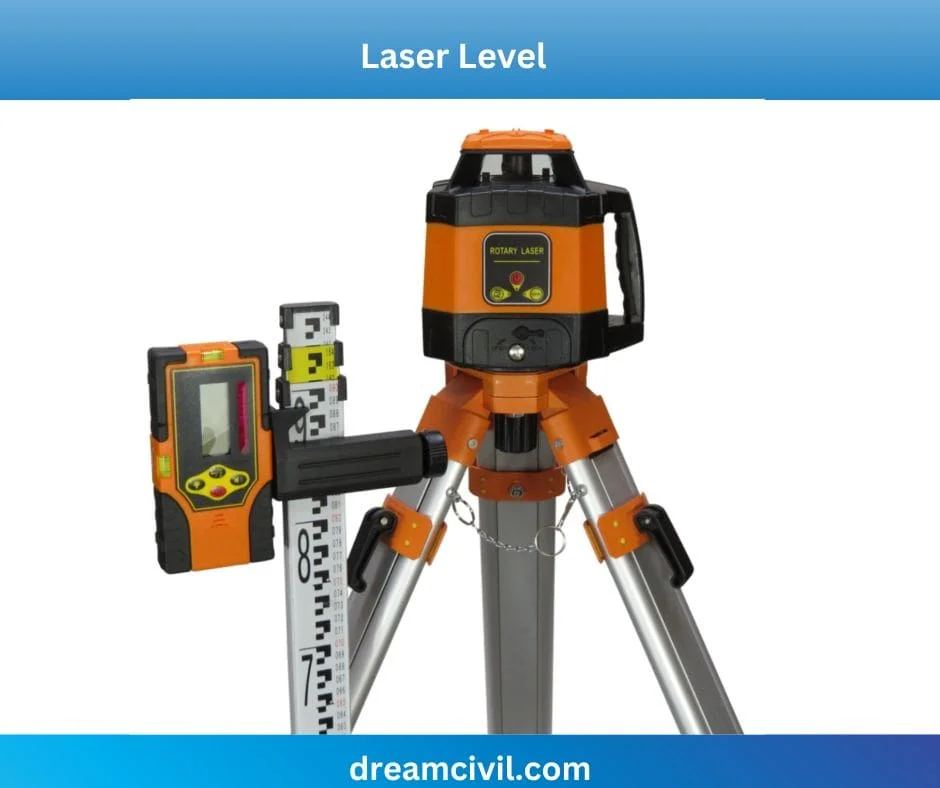 Laser Level Laser Level | ✓ It is widely used in survey and construction activities to level and alignment applications. |
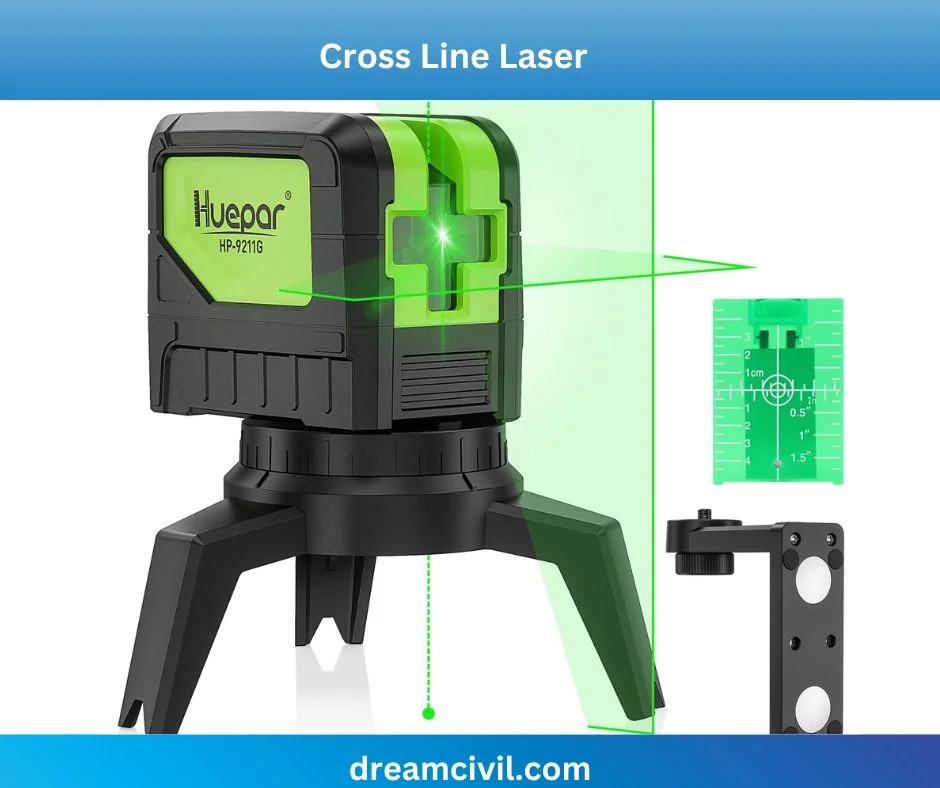 Cross line laser Cross line laser | ✓ It helps to take accurate measurements for levelling and alignment by intersecting horizontal and vertical laser beams onto the surface. |
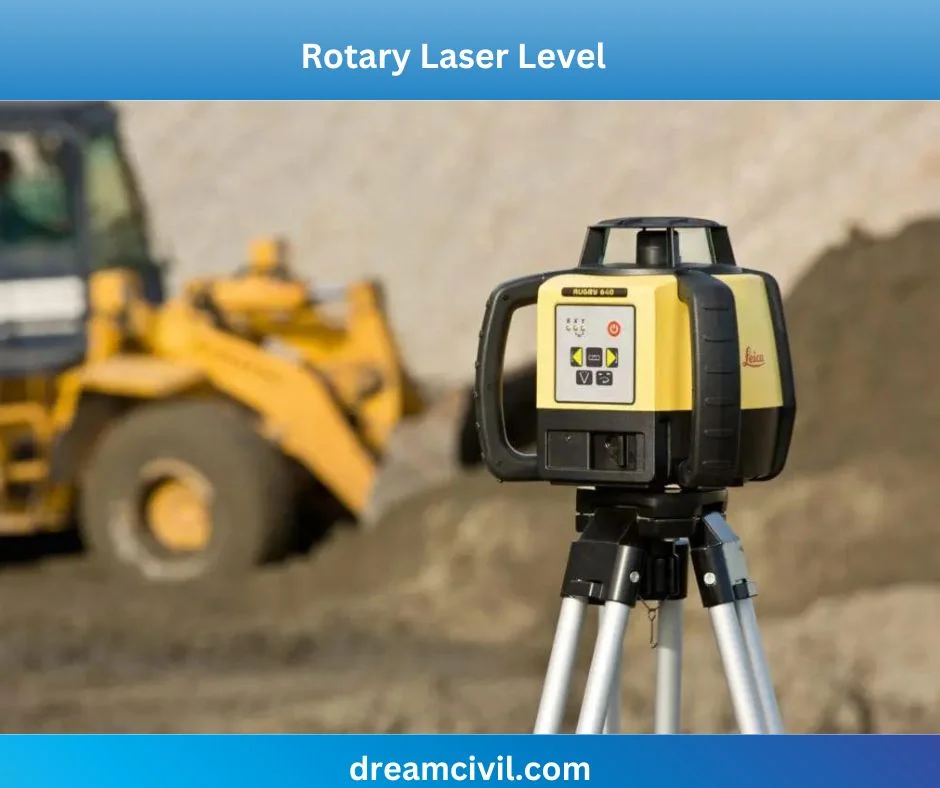 Rotary Laser Level Rotary Laser Level | ✓ It provides proper alignment and levelling for Foundations and Floors. ✓ It helps to Set Wall Heights and Align Ceilings. ✓ It helps to Install Tiles and Flooring, and is applicable for setting Grades for Sloped Surfaces. |
4. Angle, Pitch & Slope Measuring Tools
| Tools | Construction Use |
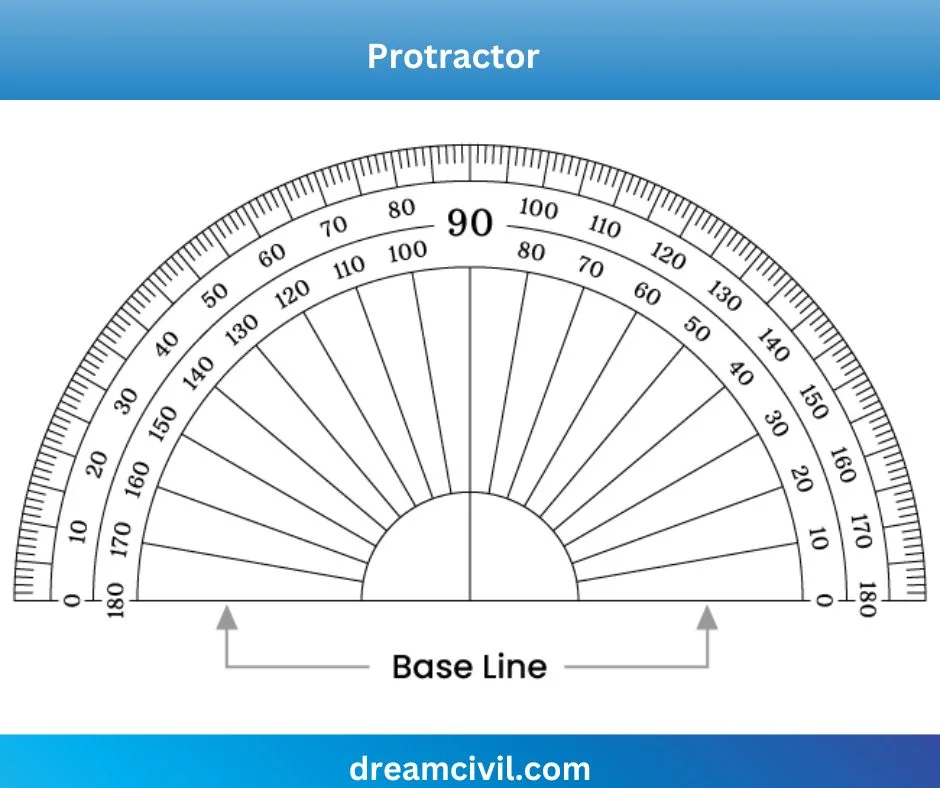 Protractor Protractor | ✓ It is used to measure and draw an angle. |
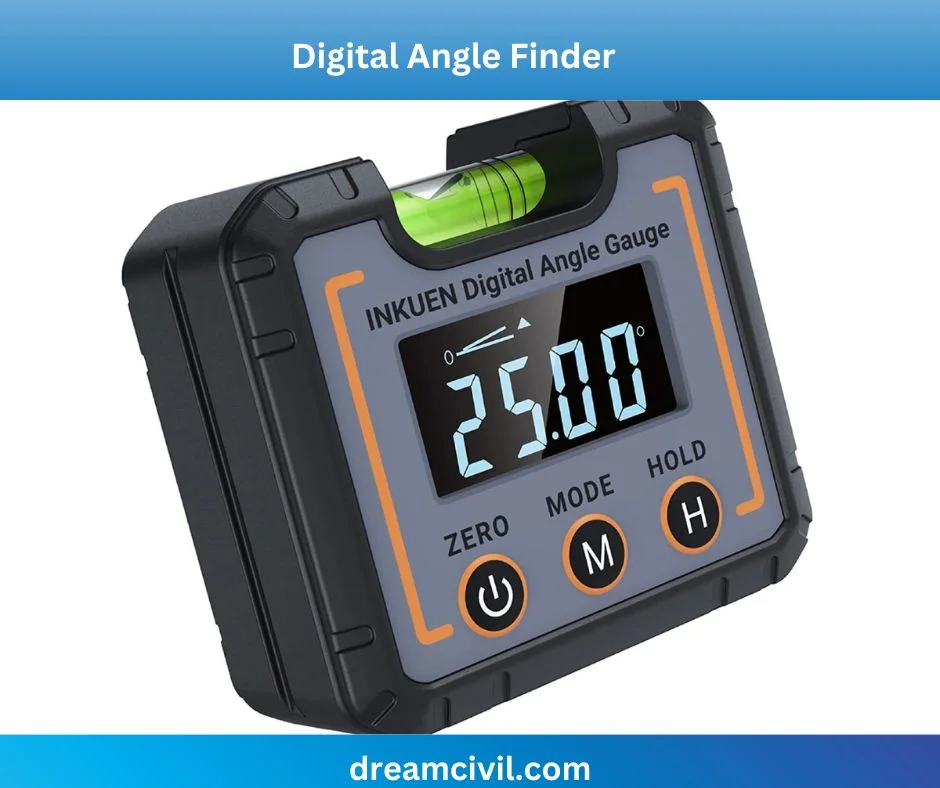 Digital Angle Finder Digital Angle Finder | ✓ It helps to determine angles quickly using an electronic sensor. |
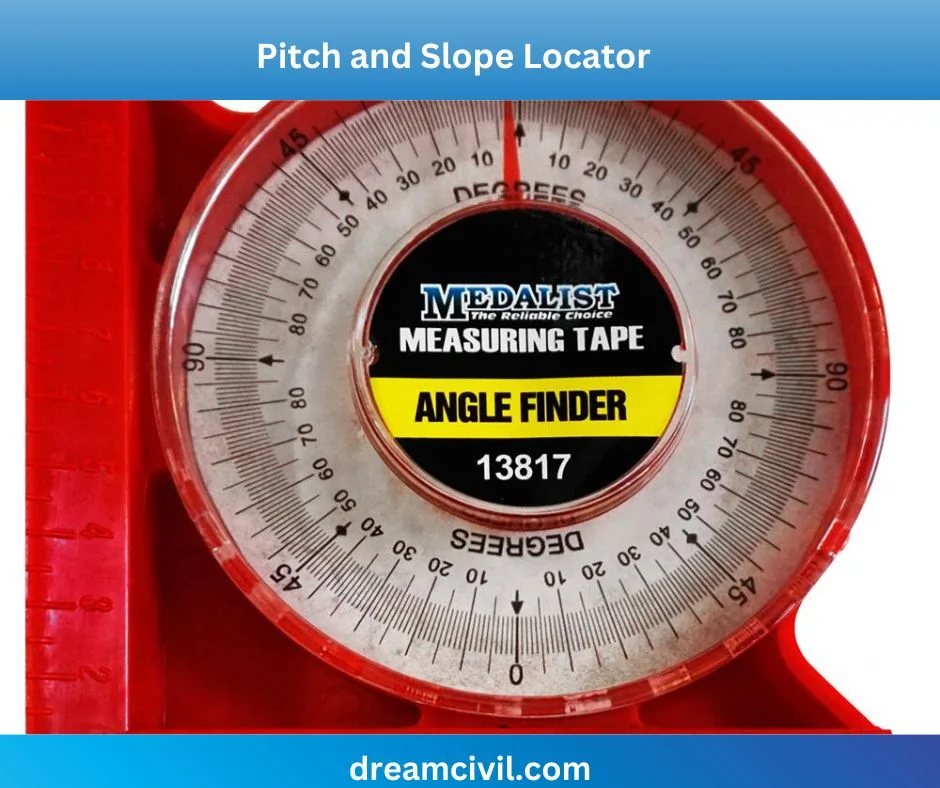 Pitch and Slope Locator Pitch and Slope Locator | ✓ It is used to identify pitch, angles and slope accurately for electrical, carpentry, plumbing, and HVAC work. |
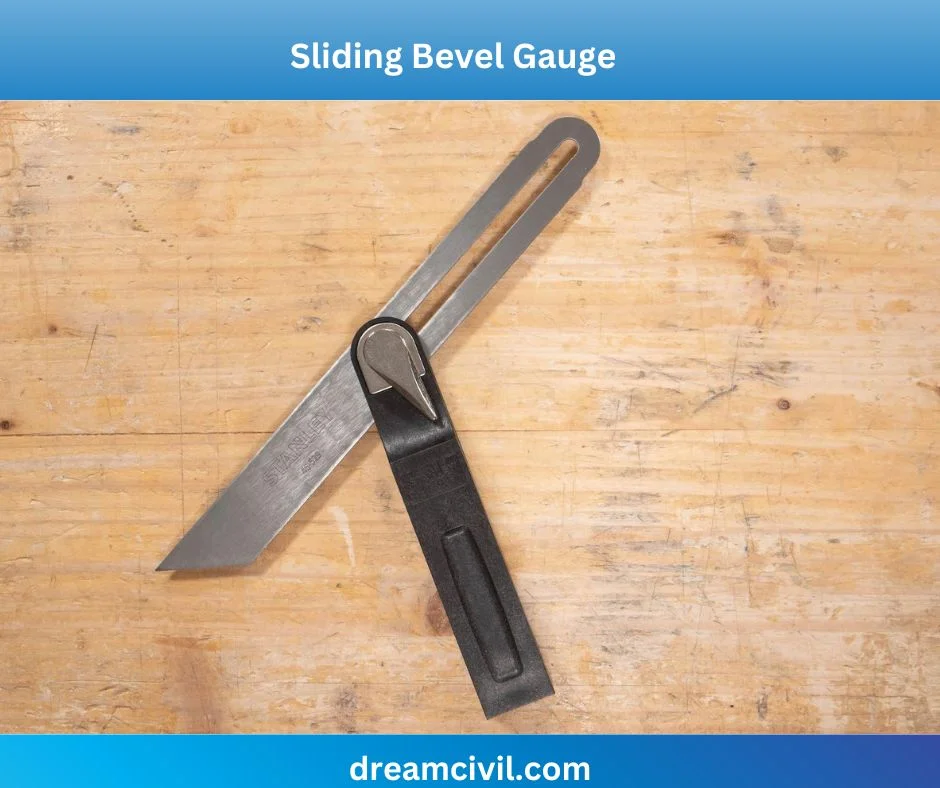 Sliding Bevel Gauge | ✓ It is an adjustable gauge for transferring and setting angles. |
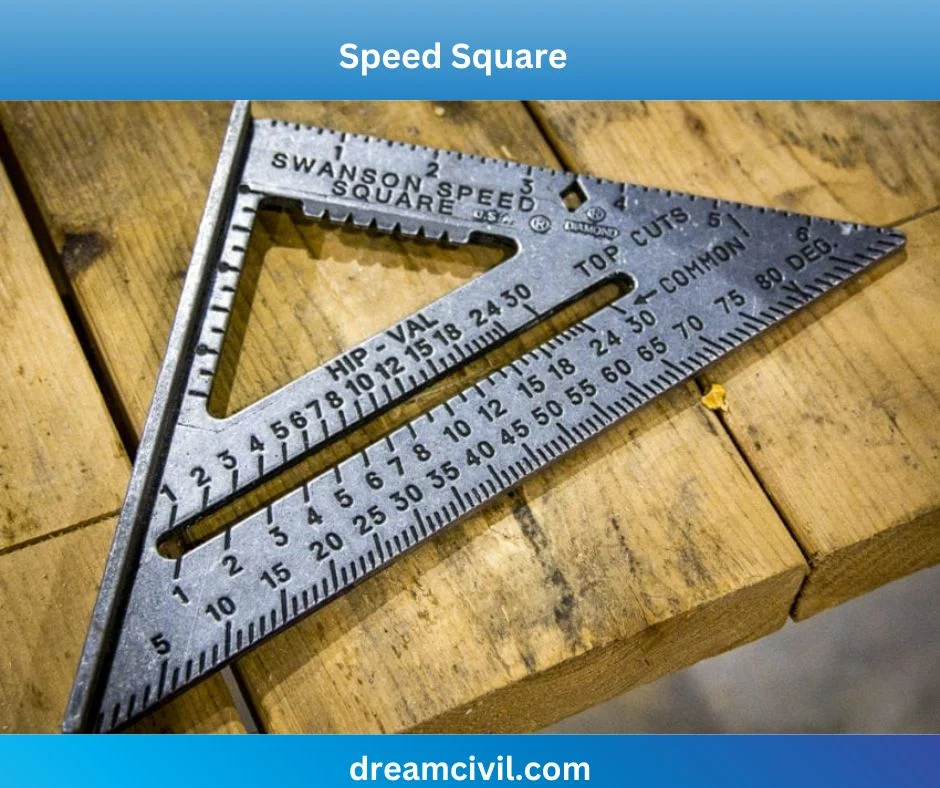 Speed Square | ✓ It is used to quickly draw, mark and measure perfect 90- or 45-degree cuts. |
5. Surveying & Geomatics Instruments
| Tools | Construction Use |
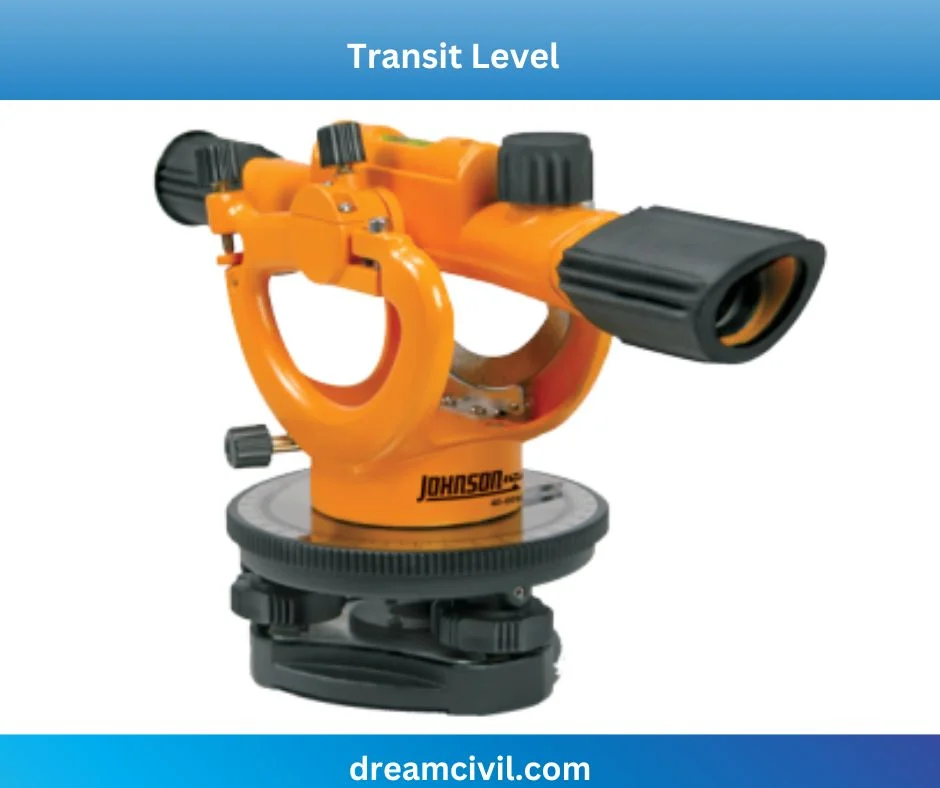 Transit level Transit level | ✓ It is mainly used for surveying and building. |
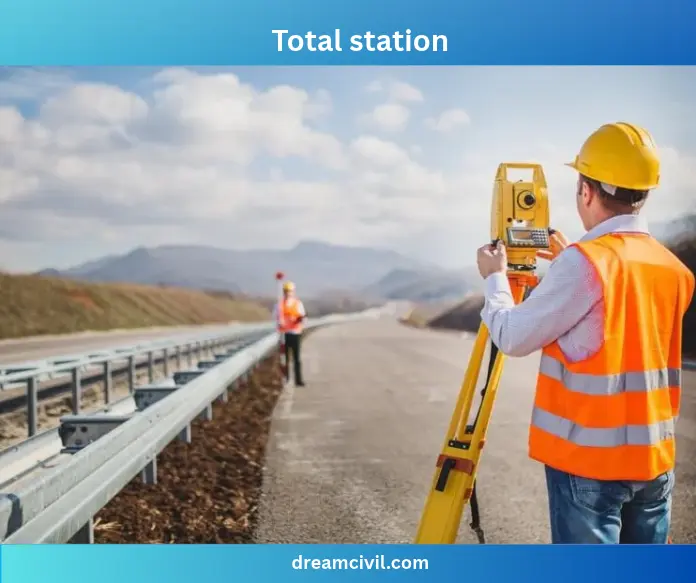 Total station Total station | ✓ It is used for distance measurement using infrared signals. ✓ It is used to measure the angle between two points. ✓ It is used to identify the coordinates of the surveying points. |
6. Layout, Marking & Alignment Tools
| Tools | Construction Use |
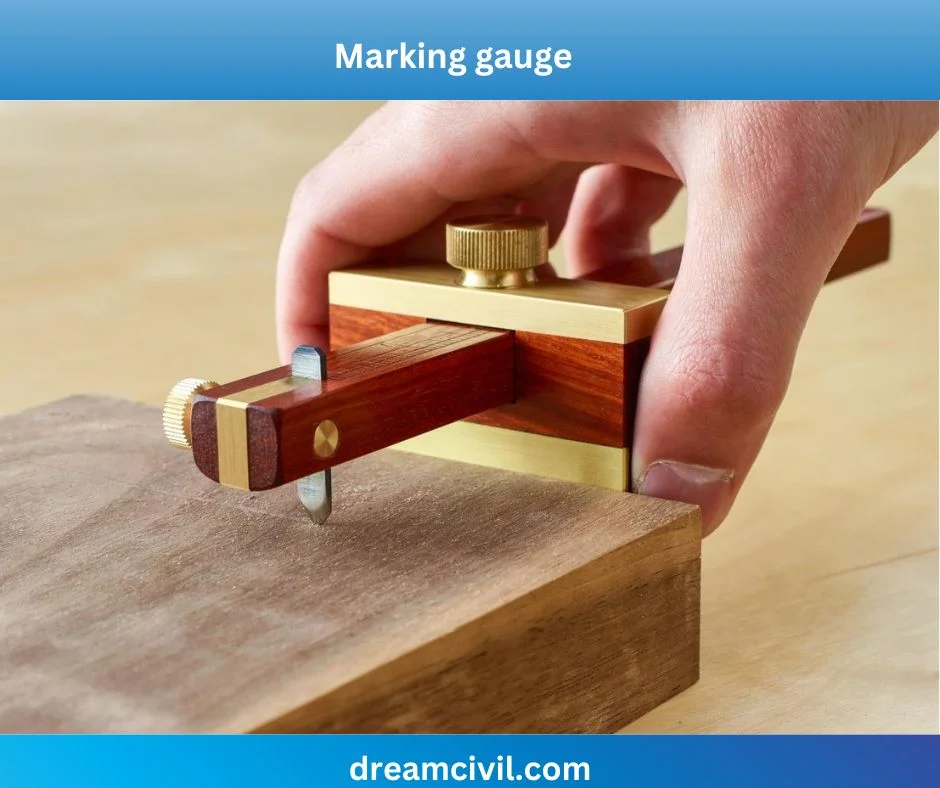 Marking Gauge | ✓ It marks out lines in wood for cutting and many other purposes.1 |
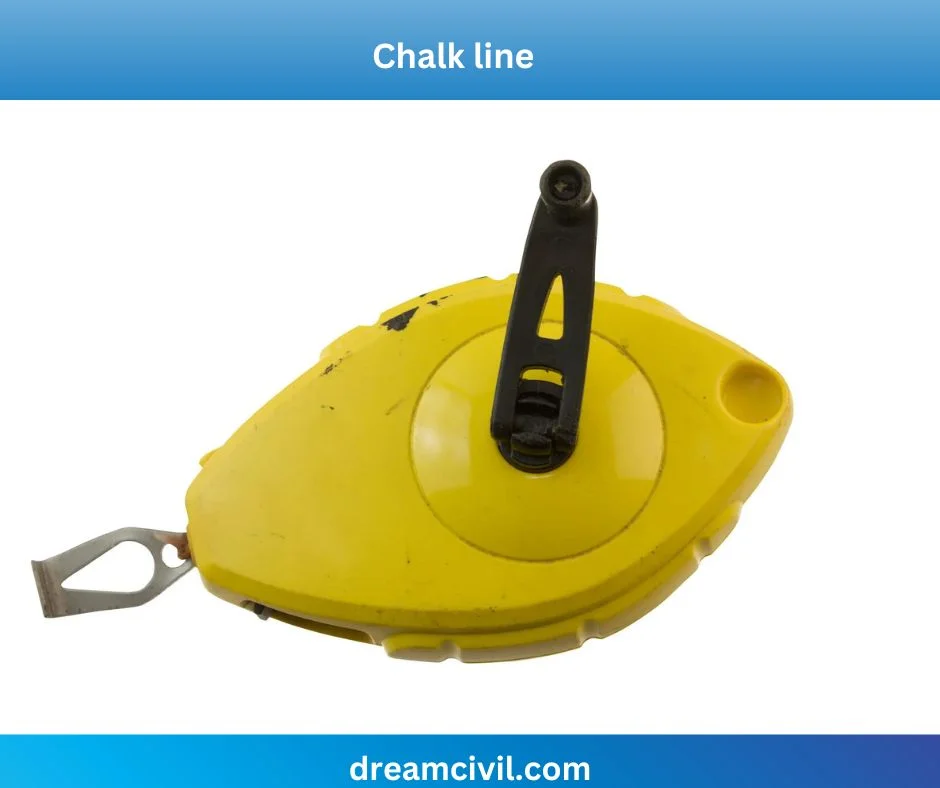 Chalk Line Chalk Line | ✓ It is used for marking a long and straight line on flat or irregular surfaces by pinching the string halfway. |
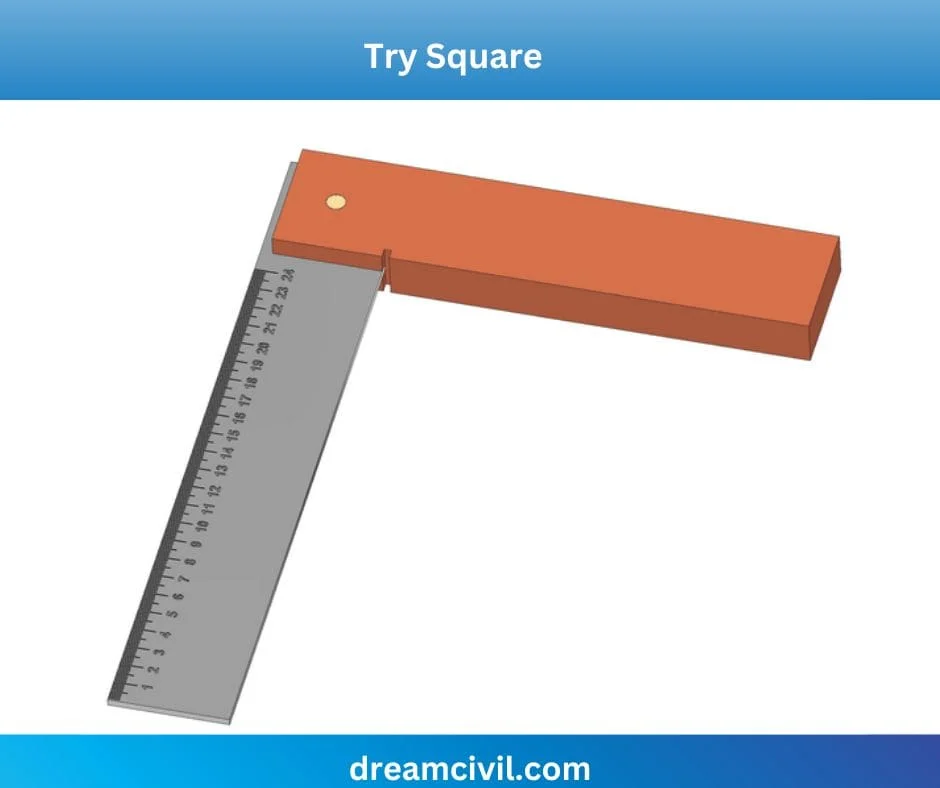 Try Square Try Square | ✓ It is used to measure and mark the material at an exact 90-degree angle. |
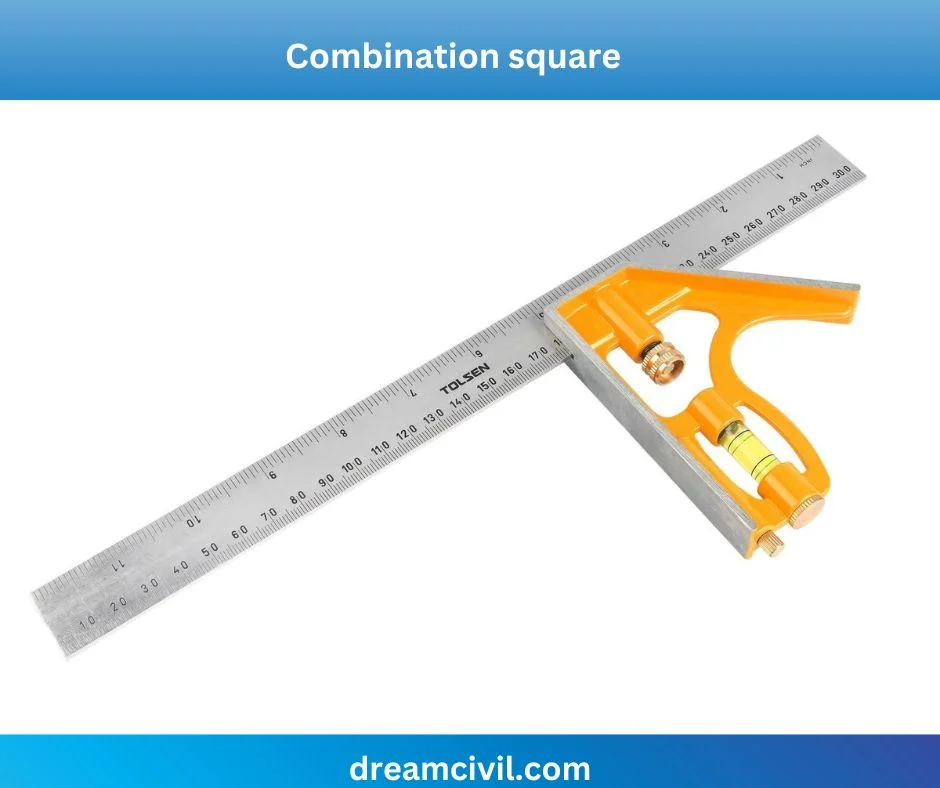 Combination Square Combination Square | ✓ It is used to measure the centre and depth of a circular object and to detect the correctness of right angles in metalworking, woodworking and stone masonry. |
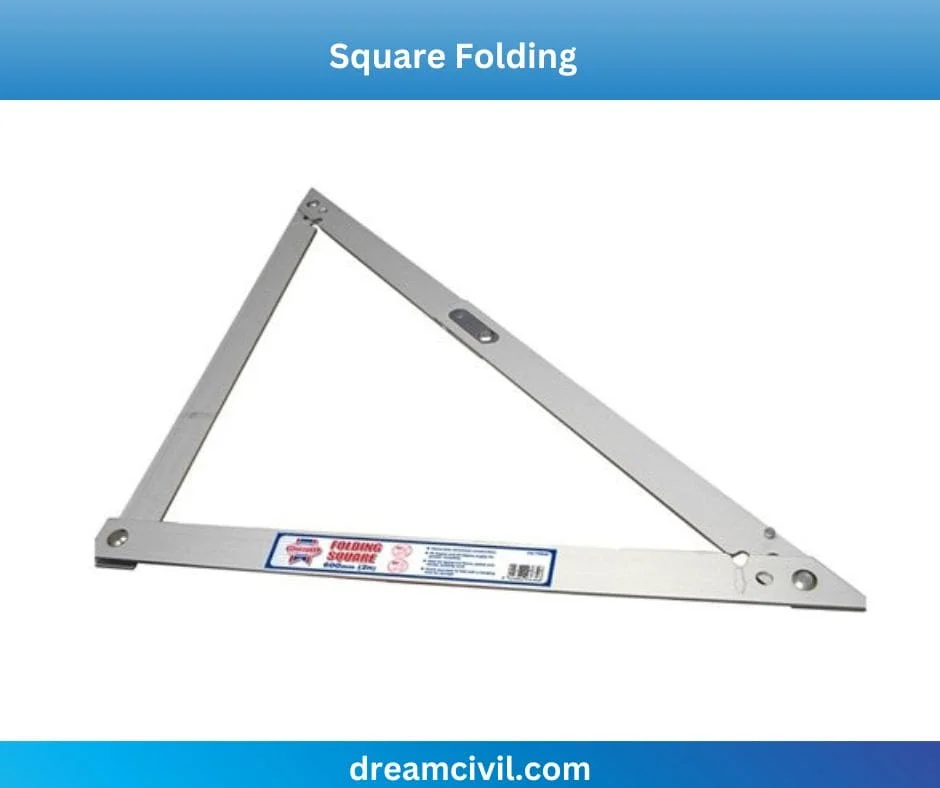 Square folding Square folding | ✓ It is used to lay tiles or wooden floors, patios, and many others for accurate 90-degree measuring. |
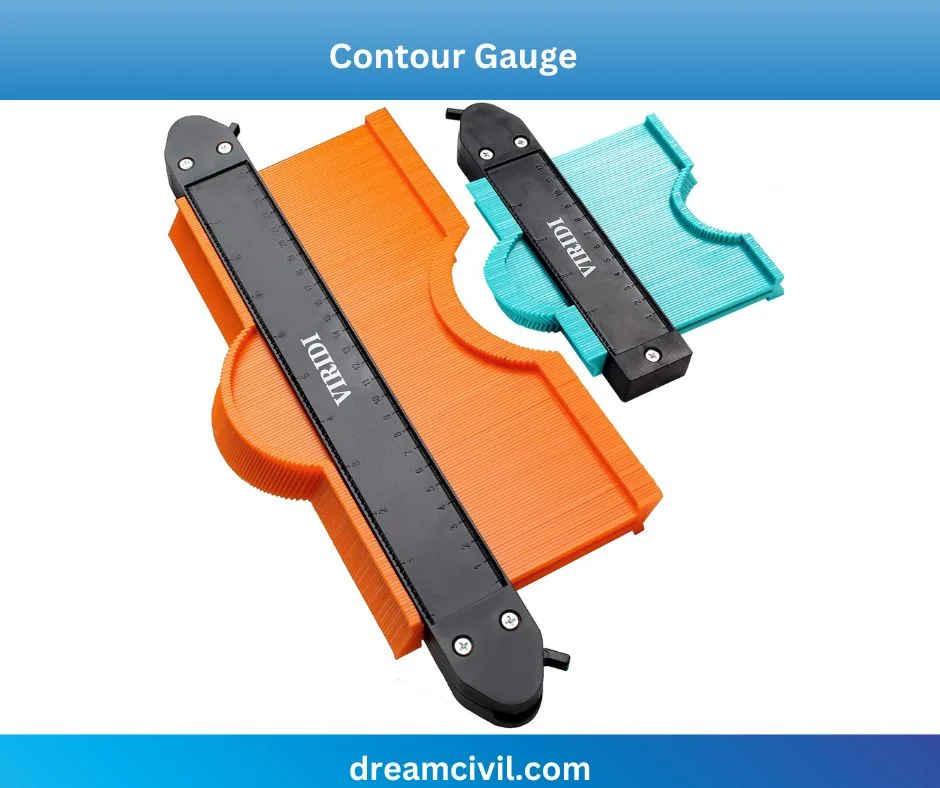 Contour Gauge Contour Gauge | ✓ It is used to replicate the irregular shape and transfer it to the wood or tile for accurate cutting. |
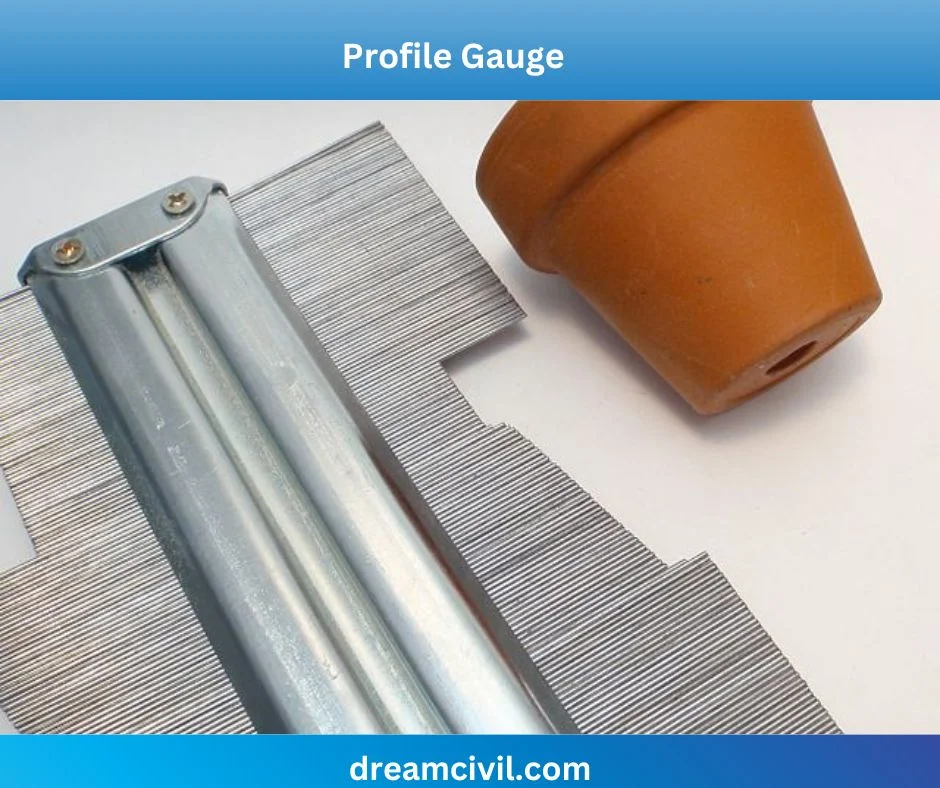 Profile Gauge Profile Gauge | ✓ It records the cross-sectional shape of a surface. |
7. Material, Environmental & Site Measurement Tools
| Tools | Construction Use |
|
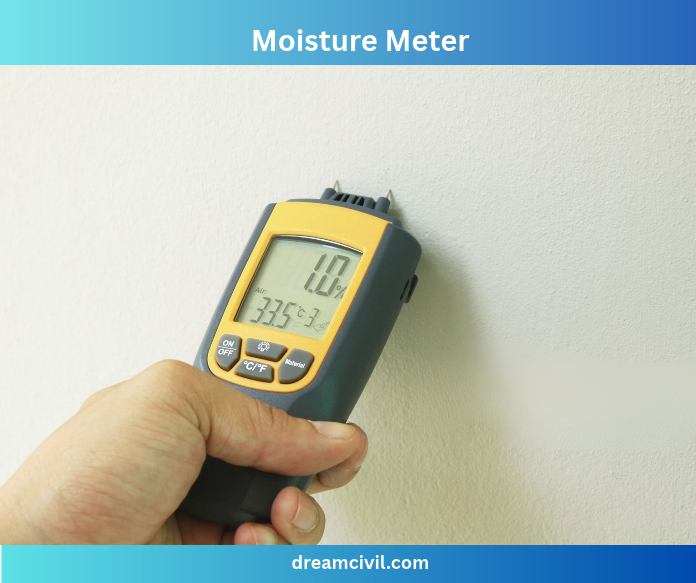
Moisture Meter | ✓ It measures the presence of moisture in wood, concrete, walls and other different construction materials. |
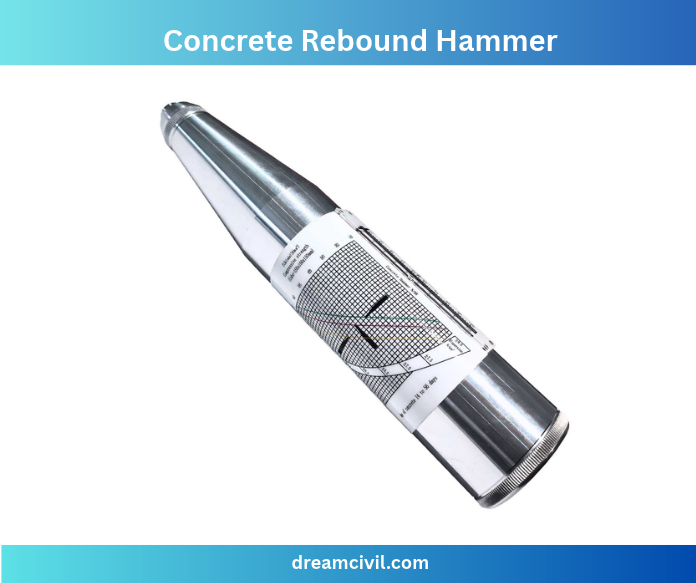 Concrete Rebound Hammer Concrete Rebound Hammer | ✓ It is used to check the hardness of the surface and uniformity of concrete. |
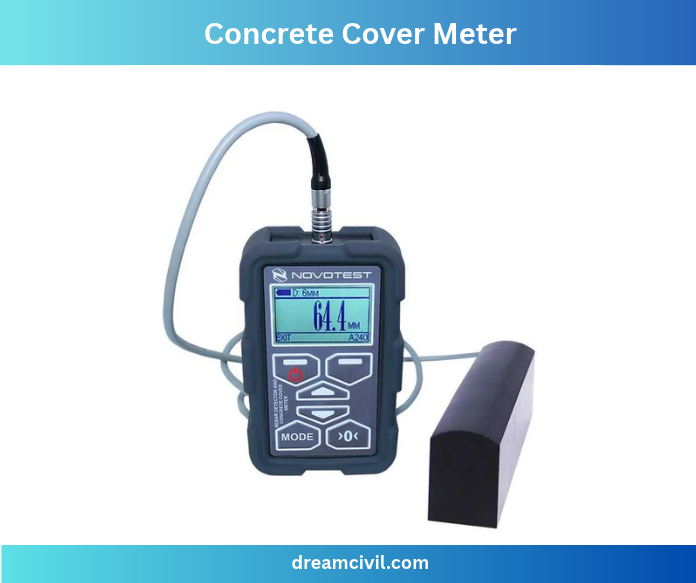 Concrete Cover Meter Concrete Cover Meter | ✓ It is used to measure concrete cover, locate reinforcement bars, and estimate rebar diameter during inspection. |
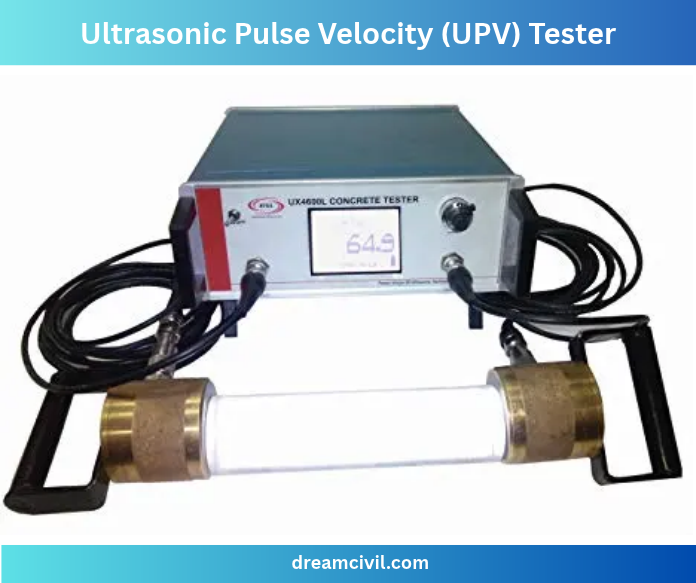 Ultrasonic Pulse Velocity (UPV) Tester Ultrasonic Pulse Velocity (UPV) Tester | ✓ It uses ultrasonic pulses for assessing the quality and uniformity of the concrete. |
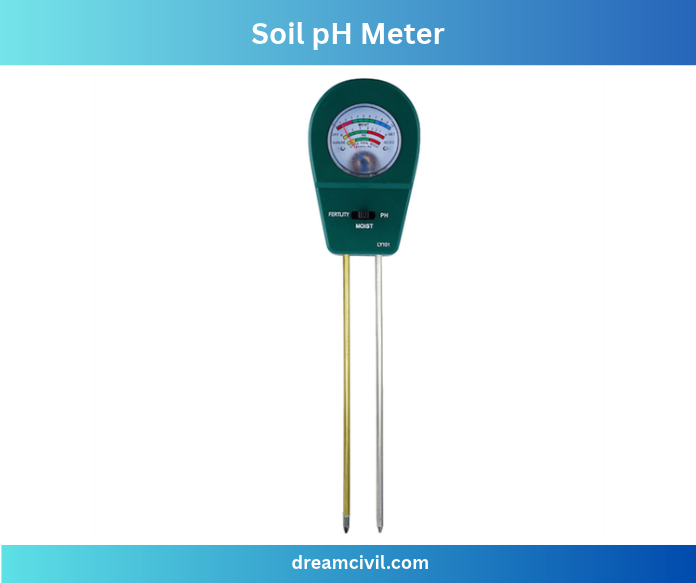 Soil pH Meter Soil pH Meter | ✓ It is used to determine the corrosivity of soil and to identify the acidity and alkalinity of the concrete foundation, steel piles, etc. |
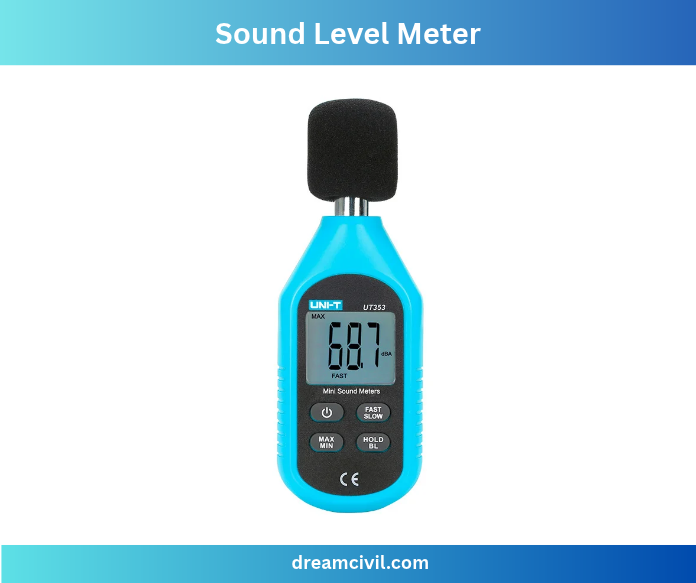 Sound Level Meter Sound Level Meter | ✓ It measures the noise of a construction site to ensure workers’ safety. |
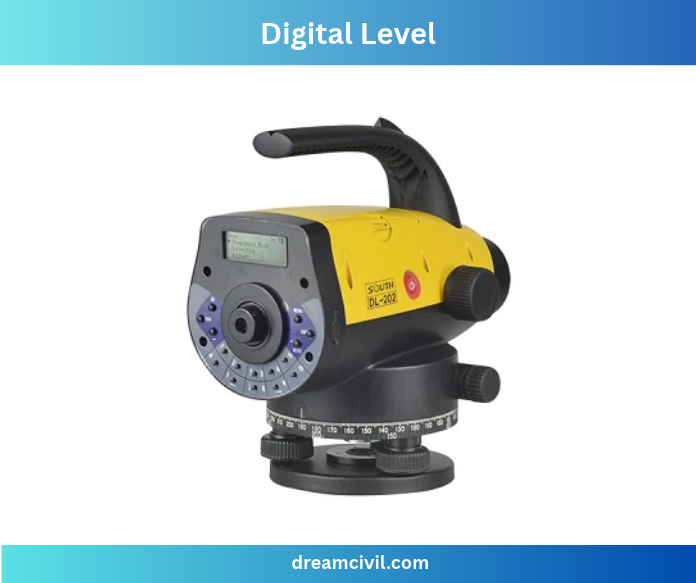 Digital Level Digital Level | ✓ It measures horizontal and vertical angles, and elevation difference with high accuracy. |
#. Which measuring tool should you use?
Here are some measuring tools listed below along with their purpose:
| Preferred Tools | Purpose |
| ⤷ Tape measure or a laser distance meter | ✓ It is used to measure room length. |
| ⤷ Odometer | ✓ It is used to measure long distances. |
| ⤷ Spirit level | ✓ It is used to check whether the surface is horizontal. |
| ⤷ Dumpy level | ✓ It is used to identify the elevation difference. |
| ⤷ Protractor or digital angle finder | ✓ It is used to measure angles on a paper sheet. |
| ⤷ Total station | ✓ It is used to identify the coordinates of the surveying points. |
| ✓ Plumb bob or plumb rule | ✓ It is used to confirm vertical alignment |
| ✓ Vernier calliper | ✓ It is used to measure inner and outer diameters of cylindrical objects like pipes, steel rebar, etc. |
| ✓ Micrometer | ✓ Measures the thickness and outer diameter of wire, rebars, etc with higher accuracy. |
| ✓ Feeler Gauge | ✓ It is a measuring instrument that measures narrow gaps and crack widths between two closed objects. |
#. FAQs
Q. What are the best tools for measuring and levelling in construction?
Ans: The best tools for measuring in construction are a tape measure, which helps to measure linear distance, like measuring rooms, walls, etc., whereas for levelling sprit level is commonly preferred, as it helps to verify the horizontal and vertical alignments of doors, windows, brickwork, etc.
Q. What tools are used to measure height in construction?
Ans: To measure height, measuring tape, laser distance meter, total station, levelling instruments or GNSS equipment are used based on the application and the needs of builders and surveyors.
Q. How can we measure the length of the room accurately?
Ans: A tape measure is used to measure the linear dimension, so by using it we can measure the length of the room precisely.
Q. How can we check whether a surface is perfectly horizontal?
Ans: By using a spirit level, we can identify if the surface is horizontal or not.
Q. How can the difference between two points be determined?
Ans: The difference between two points can be determined by using a dumpy level.
Q. What instrument is used to measure an angle on a drawing or paper?
Ans: A protractor or digital angle finder can be used to measure an angle on a drawing or paper accurately.
Q. How are the coordinates of a point determined during surveying?
Ans: A total station is used to determine the location of the required points; i.e. it can be used to compute the X, Y, and Z coordinates of the survey points.
Q. What is the simplest way to check vertical alignment?
Ans: The simplest way to check vertical alignment is using a plumb bob, which uses gravitational force pulling on a suspended weight.
Q. How can the outside and inside diameter of a pipe be measured accurately?
Ans: We can use a vernier calliper to measure the outside and inside diameter of cylindrical objects such as pipes, rebars, etc.
| Written By | Madhu Krishna Poudel |
| Role | Construction Site Supervisor | Founder, DreamCivil |
| Experience | 8+ years of practical construction experience |
| Technically reviewed by | Er. Bikas Kafle |
References:
leevalley.com
https://www.leevalley.com/en-ca/shop/tools/hand-tools/marking-and-measuring/marking-gauges/77029-deluxe-marking-gauges [↩]